What if a planning tool could think alongside a teacher?Not just store things for them.
30,000+ resources teachers couldn't navigate. Rebuilt as a unified AI-native platform that recommends, drafts, and remembers so every teacher meets their library at the moment they need it.
See it in motion
The Filing Cabinet Drawer in action
The problem
LLL had built something remarkable: a library of 30,000+ resources trusted by teachers nationwide, but the scale itself had become the problem. Members kept saying "I can't find what I'm looking for", not because search was broken, but because they didn't know what to ask for. They fell back on the same handful of activities, missing a library they were paying for every month.
Member interviews surfaced a sharper insight: teachers don't want to be told how to lesson plan. Every teacher already has a system. Forcing them into a new one wasn't a solution. It was a different kind of friction.
LLL had everything teachers needed. Teachers just had no way to know it.
What we shipped
The Filing Cabinet. A unified Next.js application that meets teachers where they already are, instead of forcing them somewhere new. Three legacy apps consolidated into one platform with one login, built on a 69-component design system and a real CI/CD pipeline.
Five AI-native experiences turn passive search into active discovery: Smart Lists recommend the right resources at the right moment, the Differentiation Assistant streams Claude responses tailored to individual students, and the Drawer keeps a teacher's working memory persistent across the site.
The library isn't bigger. It's finally reachable.
The customer interviews really helped us understand what the minimum viable product actually was, not overshoot ourselves with something that wouldn't fix the real pain point. That discipline made the product so much more useful.
Lucky Little Learners Team
The Figma board was shared with us while it was being built. We were able to notice things that wouldn't have been noticed without a teacher brain. It felt like we were catching things before they became bigger deals.
Lucky Little Learners Team
Thank you for being so responsive. The team joined our Slack channel and helped us navigate things in real time, especially in those first weeks after launch when we didn't always know what to tell customers. Somebody was always looking.
Lucky Little Learners Team
Five AI experiences, one platform
Each one gets teachers to the right resource faster, without changing how they already work.
Working on something similar?
Tell the AI what you're building and get a straight read on whether we're the right fit.
How we built it.
Six phases. Twelve weeks. Everything owned by Lucky Little Learners from day one.
Foundation & Discovery
Build the architecture. Approve the plan.January 2026 · 2 weeks
Before writing a line of production code, we established the foundation. A Turborepo monorepo with four shared packages, a full CI/CD pipeline via GitHub Actions, TypeScript strict mode across every package, and a test infrastructure built on Vitest and Playwright. The phase ended at a gate: proceed to design and migration only after the foundation held up.
“If the foundation doesn't hold up, we don't move to production.”
This is the decision point. Architecture reviewed and approved before design or migration begins.
Design & User Experience
Architecture and scope are locked.January–March 2026 · 8 weeks
A complete design token system with licensed typography. 69 UI components built from atoms to organisms. 64 Storybook stories deployed to staging for stakeholder review. 7 embeddable widget types — each with Shadow DOM style isolation so nothing conflicted with the existing WordPress site. Every component unit tested before it shipped.
Migration, AI Features & Deploy
Ship to production. No deferred problems.February–May 2026 · 10 weeks
Three legacy apps fully migrated into one platform. Smart Lists built with three recommendation engines: collaborative filtering, behavior-based ranking, and seasonal context. The Differentiation Assistant streams Claude responses tailored to individual students with an instant Algolia fallback. The Teaching Assistant, Filing Cabinet Drawer, and PDF Bundle Merge shipped together — all gated by a JWT-based membership access layer. Production deployed with CI/CD branch strategy locked.
Refine
30-day warranty. Bug-smashing, on us.May 2026 · 30 days
Three post-deployment fixes shipped within the warranty window at no charge. Download button corrected for members in Recently Viewed. Drawer push behavior fixed. Autocomplete dropdown corrected. Full documentation delivered: API reference covering 24 routes, CMS collections, service layer, widget embedding guide, design system, and UX flows. After warranty, LLL stayed on. Relationship, not retainer.
This project followed our four-phase methodology. See how every project runs →
Built With
A 69-component atomic design system, 64 Storybook stories, branch-based staging, and a full Vitest + Playwright suite in CI/CD. Every change ships through the same gates as the production code.
More work
View all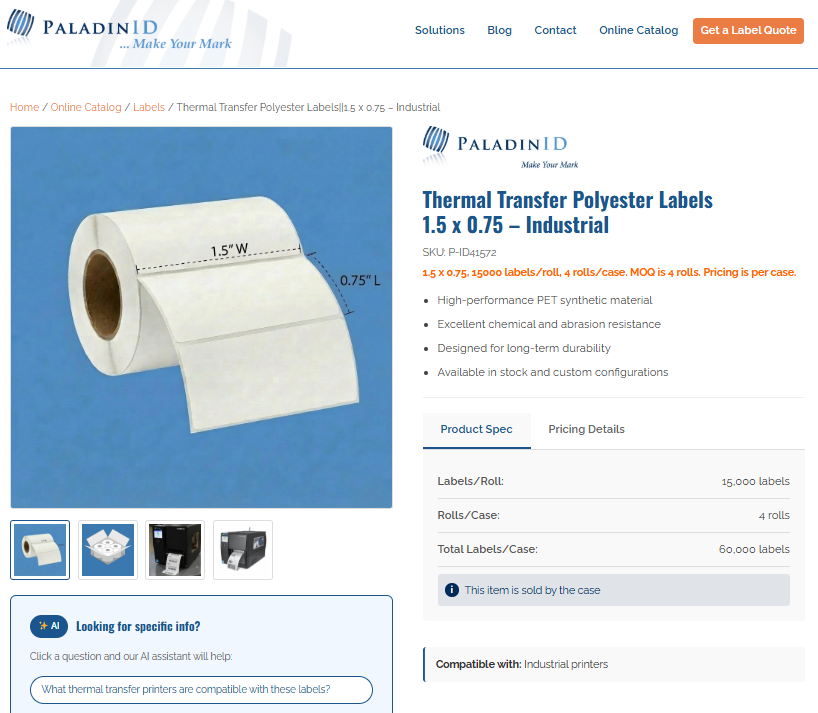
Industrial printing distributor · AI-first e-commerce
PaladinID
The problem: Competing against manufacturers who sell direct, with a static website and a catalog buyers could not navigate.
Read the case study
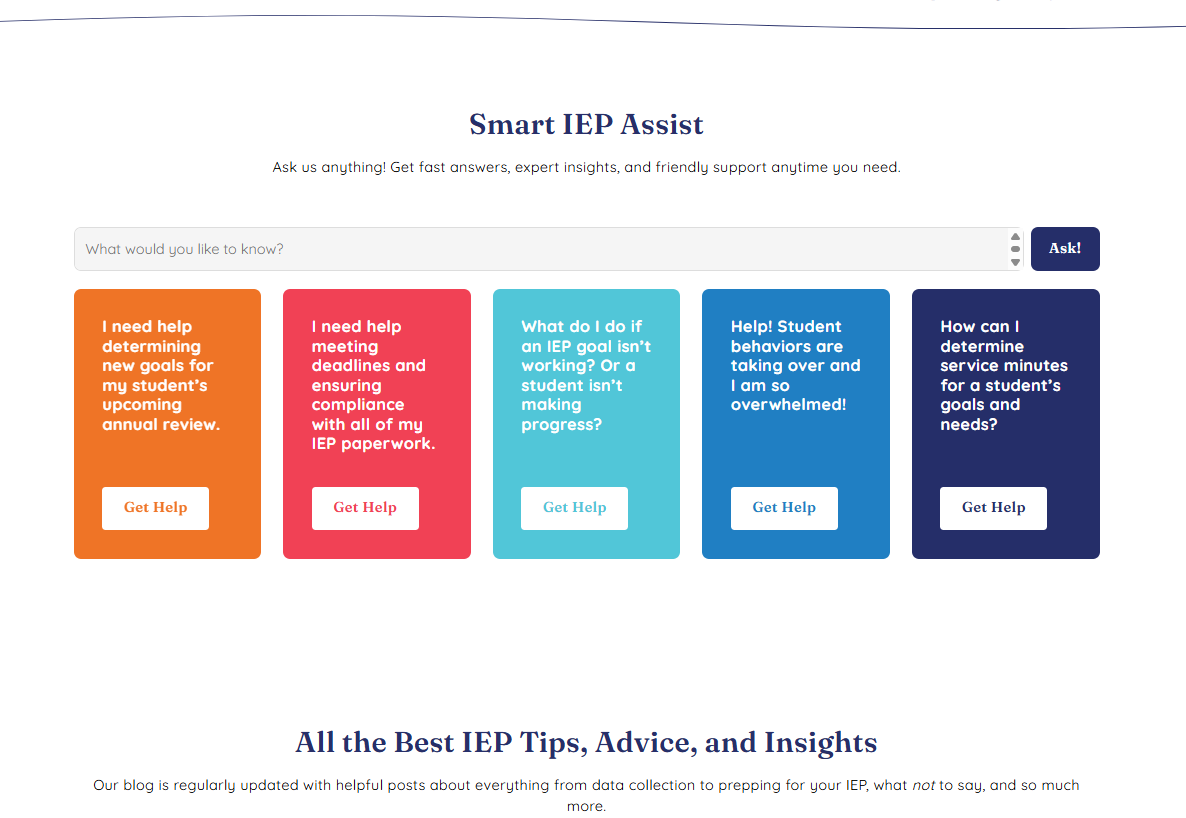
Special education · membership product
The Intentional IEP
The problem: A library of IEP goals and six years of methodology that educators paid to access. The search returned noise. The platform was split across multiple logins.
Read the case study
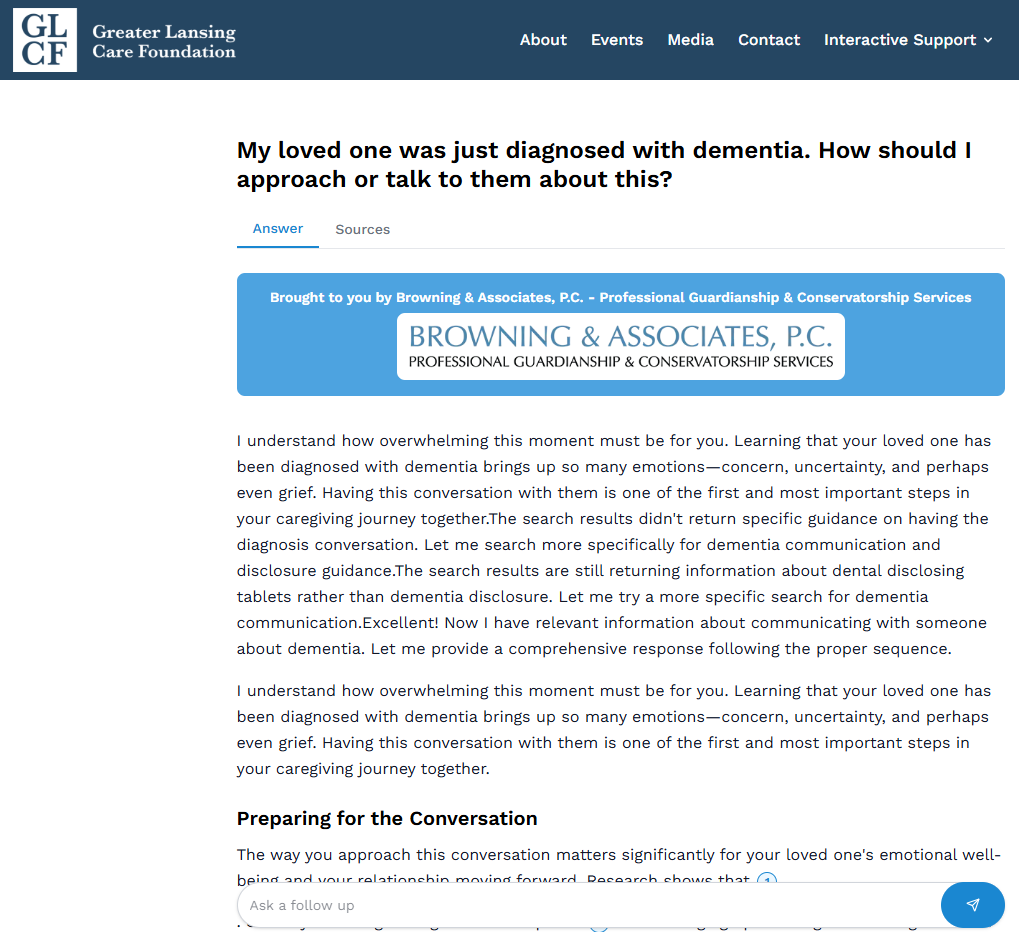
Healthcare nonprofit · AI-first website rebuild
Greater Lansing Care Foundation
The problem: Their website couldn't give caregivers real, cited answers about local resources. Just static pages and dead-end links.
Read the case study
See yourself in this story?
Most of our clients came to us with a similar situation. One conversation to find out if yours is a fit.
No commitment · No spec doc required.